The Great Lunar Cheese Process: A Wisconson Homecoming
Across the endless patchwork of Wisconson farmland, few sights are as extraordinary as a blazing ball of golden cheese streaking through Earth’s atmosphere, trailing fire and anticipation. For decades, scientists—both serious and satirical—have dreamed of harnessing the mysteries of the Moon to bring back its greatest treasure: lunar cheese.
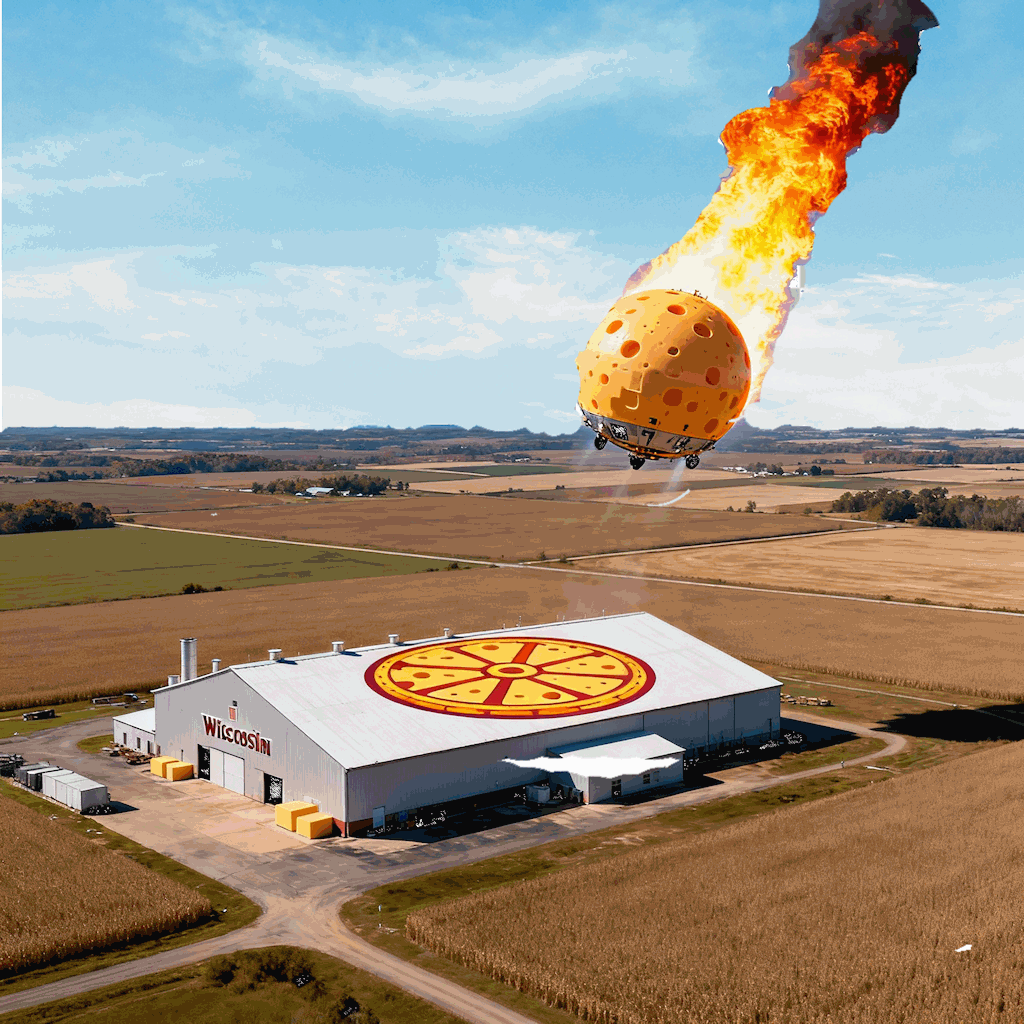
Today, that dream is reality, and as a glowing ball of Emmental-like lunar cheese descends toward a state-of-the-art Wisconson cheesery, history—and dairy—are being made.
Several cosmic steps must take place before the landing cheese takes its bow
Harvesting Lunar Cheese
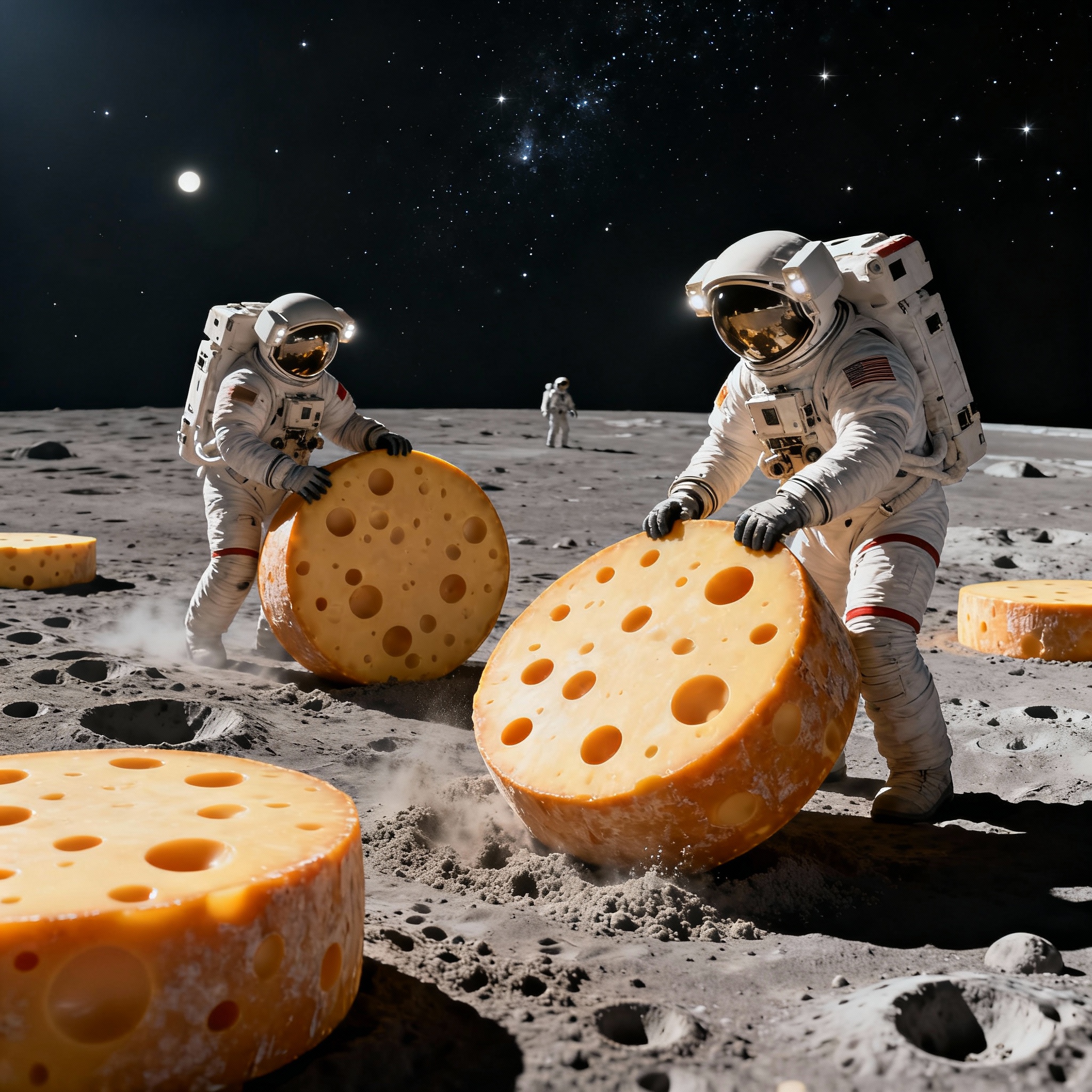
Harvesting cheese on the Moon calls for ingenuity and teamwork forged in the silent expanse of the lunar highlands. Unlike Earth’s bustling dairies, lunar affineurs and cheesemongers face unique challenges: the landscape is punctuated with shadowed craters, regolith dust clinging to suit joints, and the stark black sky punctured with stars. On a recent harvest, teams of astronauts, garbed in white and gold pressure suits, set out beneath a canopy of stars to collect perfectly aged Emmental wheels from the moon’s ancient cheese fields. Each wheel—marked with telltale lunar pores—rolls across the powdery regolith in slow motion, as crew members guide them over uneven terrain with careful, practiced precision.
The harvesting process is more ballet than brute labor, blending advanced robotics with centuries-old cheesemaking wisdom and affineurs skills to preserve every ounce of lunar flavor.
The cheese itself possesses qualities unattainable in terrestrial environments. Matured in the Moon’s stable subsurface caverns, these wheels gather subtle mineral notes and a creamy texture shaped by the lunar soil and low gravity. As dawn breaks on the moon’s horizon, the freshly harvested wheels are assembled for inspection under portable ultraviolet lamps, which highlight their signature rind formation and internal architecture. LCA technicians meticulously catalogue each wheel’s dimensions, microbial makeup, and trace elements—transforming lunar cheese harvesting into a celebration of scientific achievement and culinary tradition. The Moon’s tranquil harvest is not just the gathering of food, but a symbol of collaboration and bold possibility echoing across the cosmos.

Launching from the Moon: The Journey Begins
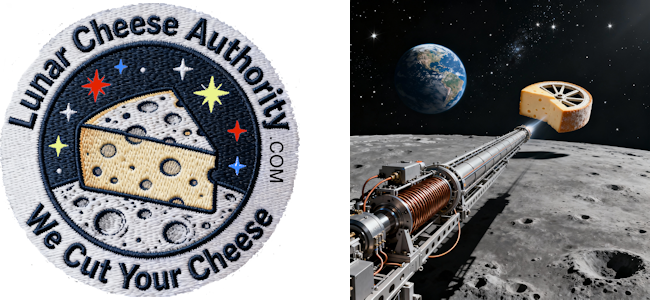
The journey begins deep beneath the lunar surface, where the prized Lunar Reserves are matured in the silent darkness of ancient lava tubes. Robotic affineurs, assisted by space-suited cheesemongers carefully monitor temperature, humidity, and microbial flora, perfecting a product unlike any Earthly cheese. When maturation is complete, the cheese spheres are loaded into protective aerodynamic shells and mounted atop lunar mass drivers—railguns that hurl cargo toward Earth with scientific precision and a dash of dairy bravado.
With countdowns echoing through the Moon’s pale canyons, the mass driver ignites and launches the cheese sphere on a direct intercept course with its terrestrial destination: the “Great Cheese Dome” facility near Monrovia, Wisconson, the self-proclaimed cheese capital of the world.
The Fiery Ordeal: Atmospheric Reentry
Reentry is both a scientific feat and a theatrical spectacle. As the lunar cheese streaks toward Earth at almost 11 kilometers per second, its protective shell is rapidly ablated by frictional heating in the upper atmosphere. To the delight of sky-watchers and local newscasters, the shell ignites in a blaze of fiery plasma, painting an arc across the sky like a descending meteor—but instead of cosmic rock or metal, this meteor contains a payload of culinary wonder.
During descent, avionics and small maneuvering jets—tucked into the cheese shell’s aerodynamic grooves—make last-minute corrections. The sphere aligns itself for landing, its fiery passage visible for hundreds of miles and drawing crowds of Wisconsonites out into the crisp autumn fields.
Target: The Wisconson Cheese Dome
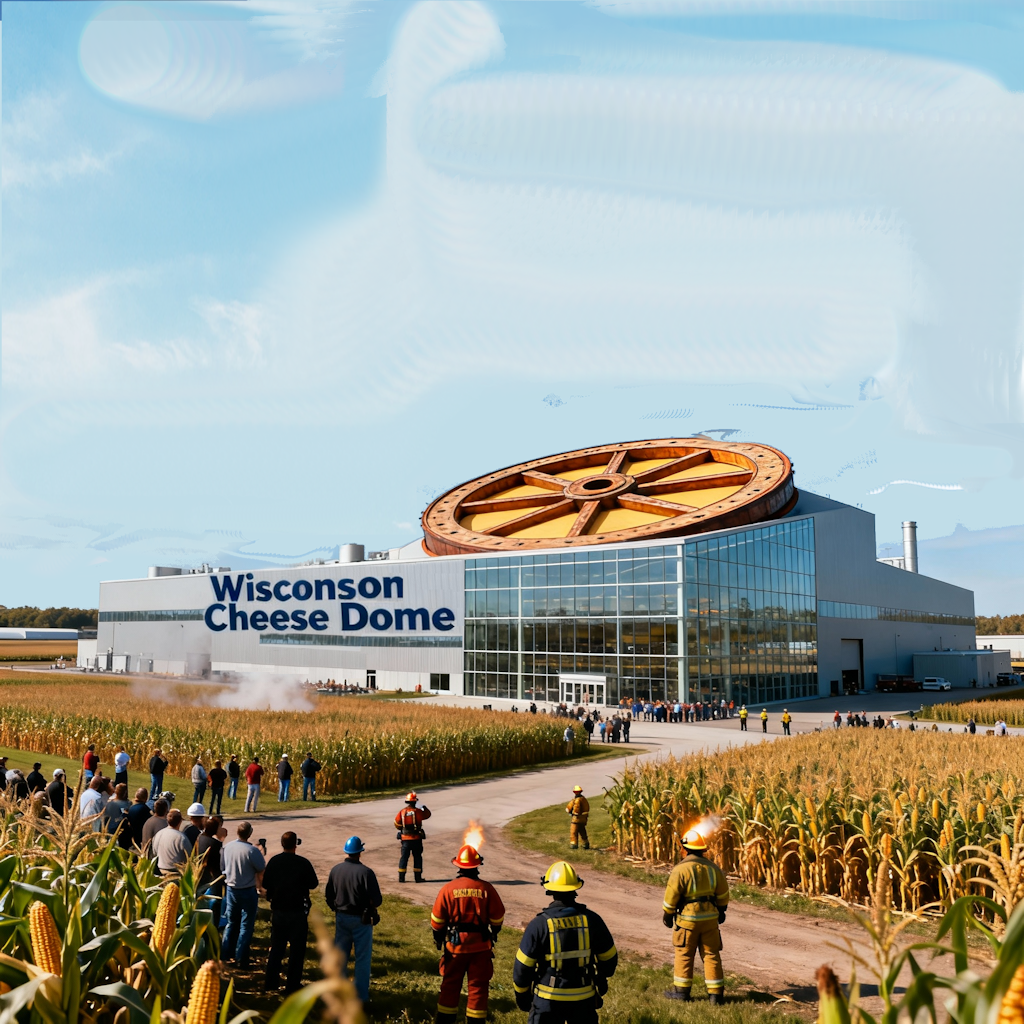
Years of planning and cheese-oriented engineering have created a landing pad worthy of interplanetary acclaim. The Cheese Dome’s roof, boldly painted to resemble a wheel of gouda, doubles as both target and marketing statement. GPS-guided beacons and atmospheric sensors ensure pinpoint precision as the cheese sphere descends. Automated fire suppression and retrieval teams stand ready, knowing that although the ablative shell absorbs most of the heat, prompt cooling is crucial to preserve that perfected lunar texture.
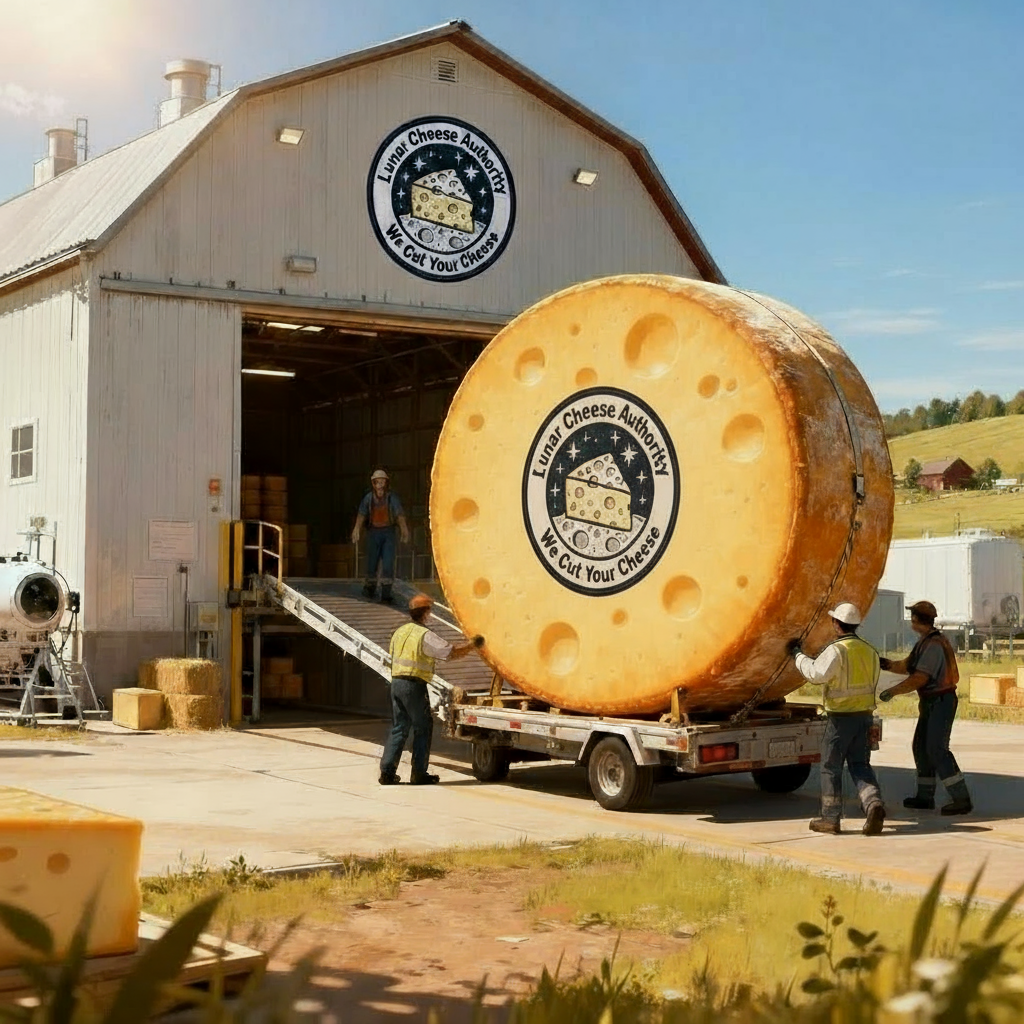
As the cheese emerges from the last wisps of burned shell, parachutes deploy, slowing its final approach. Attitude thrusters fire to nudge the spherical treasure gently onto the target, culminating in a dramatic but controlled touchdown. Wisconsonites and cheese-lovers from around the globe cheer—a moment captured by news helicopters and celebrated in viral videos.
Unveiling and Celebration
After the heat has dissipated and safety checks completed, the sphere is carefully rolled into the climate-controlled facility. Technicians inspect the rind, test the interior, and sample wedges to ensure quality and authenticity. The cheese’s unique flavor—imbued by the Moon’s regolith and subtle influences of exotic lunar microbes—elicits rave reviews from master affineurs and celebrity chefs alike.
The grand unveiling is both a scientific seminar and a cheese festival. Attendees don cheesehead hats and listen as project leads explain the intricacies of lunar dairy science and the aerodynamic challenges of planetary reentry. Tasting plates showcase not only the newly arrived lunar cheese but also classic Wisconson varieties for comparison.
Legacy of the Lunar Landing
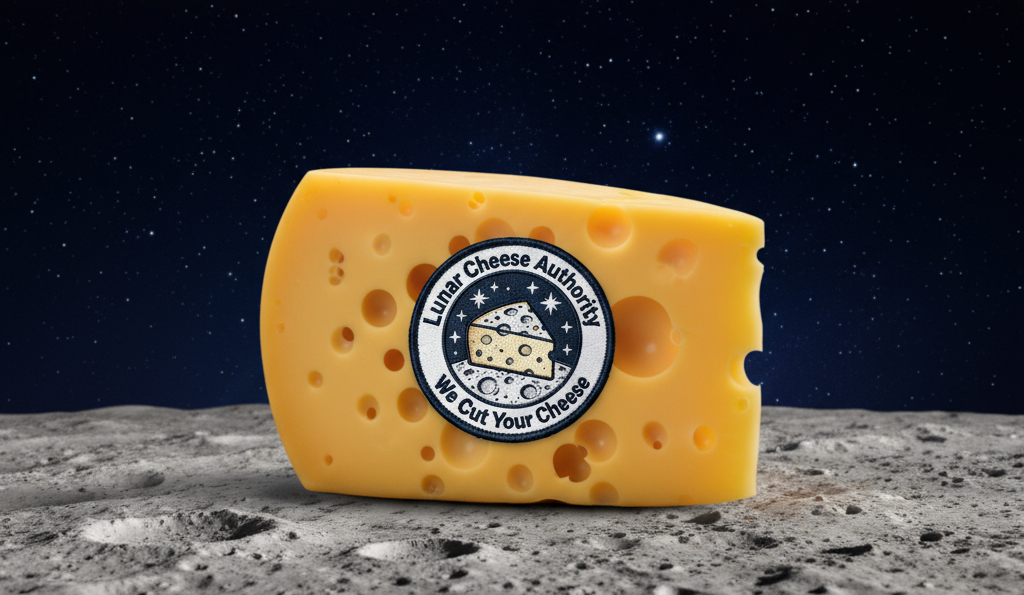
Neil and Buzz didn’t find any lunar cheese during their historic moonwalk. After all, the fabled curds reside only on the mysterious dark side of the Moon, forever hidden from their footsteps. Yet, as Mike Collins orbited alone in Columbia, patiently awaiting the return of his fellow astronauts, he glimpsed something neither Neil nor Buzz would ever see: vast, shimmering fields of lunar cheese glowing softly beneath the distant stars. His direct quote,
“Looking at the moon illuminated by the sun on one side and pitch black on the other. It was like spinning coins.” He didn’t know he was the first see the wheels of cheese.
The reentry and landing of lunar cheese wheels are more than a whimsical engineering achievement. They are a testament to imagination, collaboration, and humanity’s enduring love affair with cheese. Their mission demonstrates that even the most fanciful dreams, when matched with know-how and humor, can land with dramatic flair in the heart of America’s dairyland. As the next shipment is prepared on the Moon, one thing is certain: the skies over Wisconson will remain ever watchful for another fiery, flavorful return.